
Where Women’s Power Meets the Curvy Mountains: Women’s Empowerment in Hunza
The first thing that strikes you about Hunza isn’t the mountains, even though they are the reason most people visit. It is who stands before them, running the place. Spend even a few days in the valley, and it becomes clear that women’s empowerment in Hunza is neither a slogan nor a temporary project outcome; it is simply how the community functions.
I noticed it on the second day. A woman stood behind the counter of a small restaurant near Karimabad, taking orders, overseeing the kitchen, and rarely looking up because there was no need to. No one around her seemed to find this remarkable. I did.
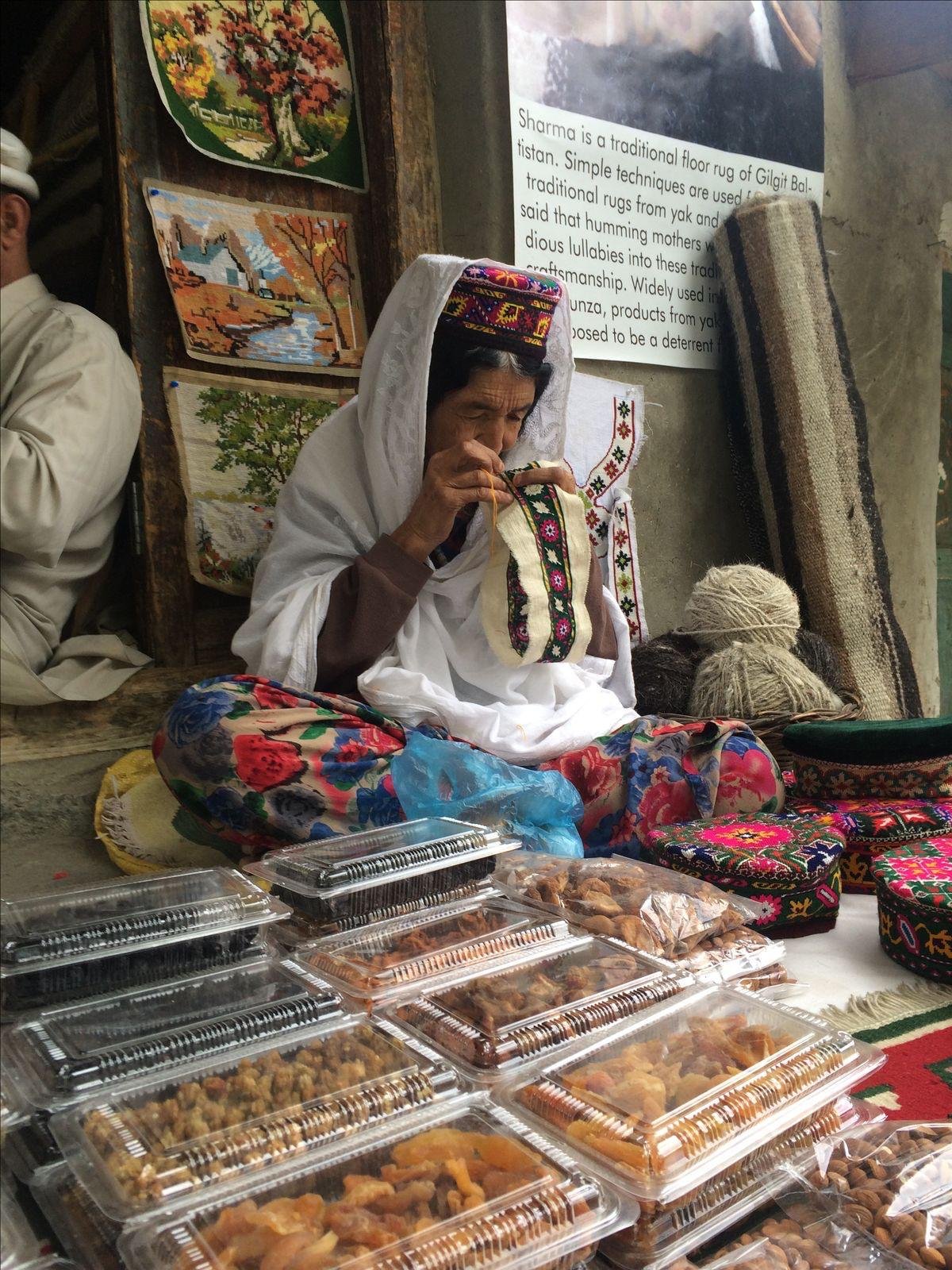
That restaurant belonged to Lal Shehzadi, one of many women entrepreneurs in Hunza who have quietly redefined what is considered ordinary in the valley’s economy. She built the business years ago from almost nothing, and it has since become the kind of place travelers go out of their way to visit, for chapshuro, a warm bowl of soup, or masar served with roti, all prepared and served by a woman who owns every part of what she has built. A short walk away sits a café established specifically to support women-led enterprises, where similar stories are easy to find. In much of Pakistan, a woman running her own restaurant is still treated as exceptional. In Hunza Valley, women hold visible ground in commerce and public life so consistently that no one seems to feel the need to remark on it.
I asked locals directly how this actually works — not the curated version told to tourists, but the reality behind it. One woman running a small shop explained it plainly: “Our progress did not come from working against our families. It came because our homes and markets were built to include us.” I heard variations of that sentiment repeated by several people, each reflecting a durable, community-wide foundation for women-led enterprise.
What stood out was not only that women worked, but who stood behind them while they did. An older man who had watched the valley evolve over decades told me: “When a woman here decides to open a business, the household adapts to support her. Her economic stability strengthens the entire family.” He said it as though it were self-evident. To him, it was.

Much of this can be traced to something less dramatic than it sounds: EDUCATION. Hunza began educating girls alongside boys generations before gender parity in schooling became a national policy conversation. That early, sustained commitment appears to be the bedrock upon which everything else was built. No one I met treated the valley’s high literacy rate as a trophy; it was simply the norm. Several residents offered a similar explanation: crime is virtually nonexistent because people are educated and, by extension, content. The first time I heard it, it
Sounded rehearsed. By the fifth time, from people with no reason to perform for a visitor, it rang entirely sincere.
Looking back, what stays with me most is that none of this was driven by wealth or proximity to major urban centers. Hunza is among the most remote regions of Pakistan – rugged, mountainous, and historically isolated for much of the year. Yet women here run businesses with a level of freedom not always found in cities with far greater infrastructure. It was not modern amenities that produced this outcome; it was generations of families deciding, consistently and without fanfare, that a woman’s ambition strengthens a household rather than threatens it. It is a model of empowerment in Gilgit-Baltistan worth close study, not merely admiration.
I traveled to Hunza for a leadership residency unrelated to any of this, yet I returned thinking about it more than almost anything else. I found myself reflecting on how closely this reality mirrors the mission of the Community Task Foundation (CTF). Women’s empowerment sits at the core of our work, particularly through Project Zankar, CTF’s initiative dedicated to women’s self-reliance and economic independence. Hunza offers a living example of what empowerment looks like once it has had generations to take root: not an isolated intervention, but an enduring culture built on the belief that women belong at the center of community life, not at its margins.
Where women’s power meets the rugged mountains, the peaks, it turns out, were never the focal point. The women were, and it is precisely that kind of quiet, structural change that CTF, through initiatives like Project Zankarr, strives to nurture across communities in Pakistan.